Drop Down MenusCSS Drop Down MenuPure CSS Dropdown Menu

Tuesday, June 18, 2013

Johnnie Stephenson Guajardo, Dot Hightower, & Louise Stephenson Hall


Many of you have probably heard about the recent deaths of three old-time Sugar Land residents.  A few weeks ago, Johnnie Stephenson Guajardo (SLHS '51) passed away.  Here is an obituary.  

Earlier this week her sister, Louise Stephenson Hall (SLHS '44), died in Bryan, Texas.  She and her husband Wayburn Hall (SLHS '43) retired to Franklin, Texas several years ago.  Many will remember Louise as our school nurse and Wayburn as the owner/operator of the first Exxon service station in Sugar Land.  Here is an obituary.

Photo from 1959 Sugar Land School yearbook

Photo from 1963 Sugar Land Elementary yearbook

The Kelly and Hall families were close friends before I was born, so it's a sad time for the Kelly family as well as the Halls.

Dot Hightower passed away last week, which added to our family's sadness.  Dot's daughter Scotty is married to my cousin Bob Bass, but like many other Sugar Land residents we knew Dot and her husband Dugan as mainstays in Sugar Land schools.  I learned to appreciate Dot's skills as story teller in later years.  I heard a lot of good stories about Sugar Land from her.

Photo from 1959 Sugar Land School yearbook

Article on Hightower's love of Sugar Land

Sugar Land School faculty basketball game in late 1950s

These old timers are in a much better place, but we'll still miss them.
 

Jake Schrum, Jr. President of Emory & Henry College


Jake Schrum, Sr. was head of agriculture operations for Sugarland Industries.  Jake, Jr. is a 1964 graduate of Dulles High School and former President of Southwestern University in Georgetown, Texas.  In August he will become President of Emory & Henry College in Emory, Virginia.  Congratulations!


Texaco Service Station Opens in 1956


As I mentioned in an earlier post, I prepared a slide show of Imperial photos for display at the Sugar Land Museum.  (Stop by on any Saturday to take a look.)  There are 190 photos in the slide show, and I reviewed at many, many more while making my selections.

Here are some samples of the culls.  They show the Texaco service station which opened on April 23, 1956 on the southeast corner of Brooks and Highway-90A.
 
Construction begins in early 1956
April 23, 1956
April 23, 1956
April 23, 1956
April 23, 1956

Chenango Sugar Mill


The Kempner family owned sugar plantations before they acquired the Ellis Plantation (Sartartia) in 1906.  One of these properties was the Chenango Plantation in Otey, Texas north of Angleton.  They sold it and other properties before purchasing the Ellis Plantation.  I don't know this with any certainty, but it's likely Chenango was a source of raw sugar for Imperial's refinery.
 

Here is a short article that appeared in The Houston Chronicle in 1955.


Here are a few more pictures of Chenango.
  

Recollections of Early Sugar Land by W. H. Dierks in 1956


In January 1956 The Fort Bend Mirror devoted part of an issue to the 4th anniversary of the 'new shopping center.'  The issue included several articles about town history, some containing recollections of long-time residents.  

The following short article recounts the memories of W. H. Dierks.  What interested me most were his comments about the Mercantile Store.  He says that before 1908 Sugar Land had a single building that served as a store and post office.  After Kempner & Eldridge bought the Cunningham Sugar Company, they moved a newer building from Imperial, Texas (Mr. Dierks refers to it as the Imperial Plantation) into town.  It became the Mercantile Store that stood until the 1970s.  


Here's a photo of workmen putting their finishing touches on it.  
 
 
Notice the date of the photo is September, so they had recently completed the move from Imperial per Mr. Dierks's recollection. He said they moved the building during a night and half a day.  

If you look closely, you can see the Ellis Plantation House being moved into Sugar Land.  It eventually sat on the east side of the Char House and served as Eldridge's residence until 1928.

I've seen T. C. Rozelle's annotations on copies of this and other photos.  He noted that they used 40 mules and large logs to 'roll the house into town.'   

Imperial, Texas was located on the south bank of Oyster Creek opposite Constellation Field, today's home of the Skeeters.  At the time this picture was taken that acreage was Prison Farm property and the site of a sugar mill, about half the size of the mill in the Cunningham refinery complex.  The mill burned in 1914 and the small community of Imperial, Texas disappeared into distant memory.
 

Wednesday, June 5, 2013

More Laura Eldridge Hospital Photos from 1957


I've reviewed a large archive of Imperial Sugar Company photos at the Sugar Land Heritage Foundation over recent weeks.  I selected 190 of them to include in a slide show for display at the Sugar Land Museum on Saturday mornings, when it's open to the public.  This week's posts offer a sample to whet your appetite.  

Visit the Museum on Saturdays from 9:00 am to 1:00 pm to see all 190 photos.  There are many more photos in the archive, so we'll update the slide show over the coming months.

The following photos supplement the ones I posted last week, showing the hospital's location.


Surgery Room - Lou Sanders, LVN

Betty Cabrera, RN

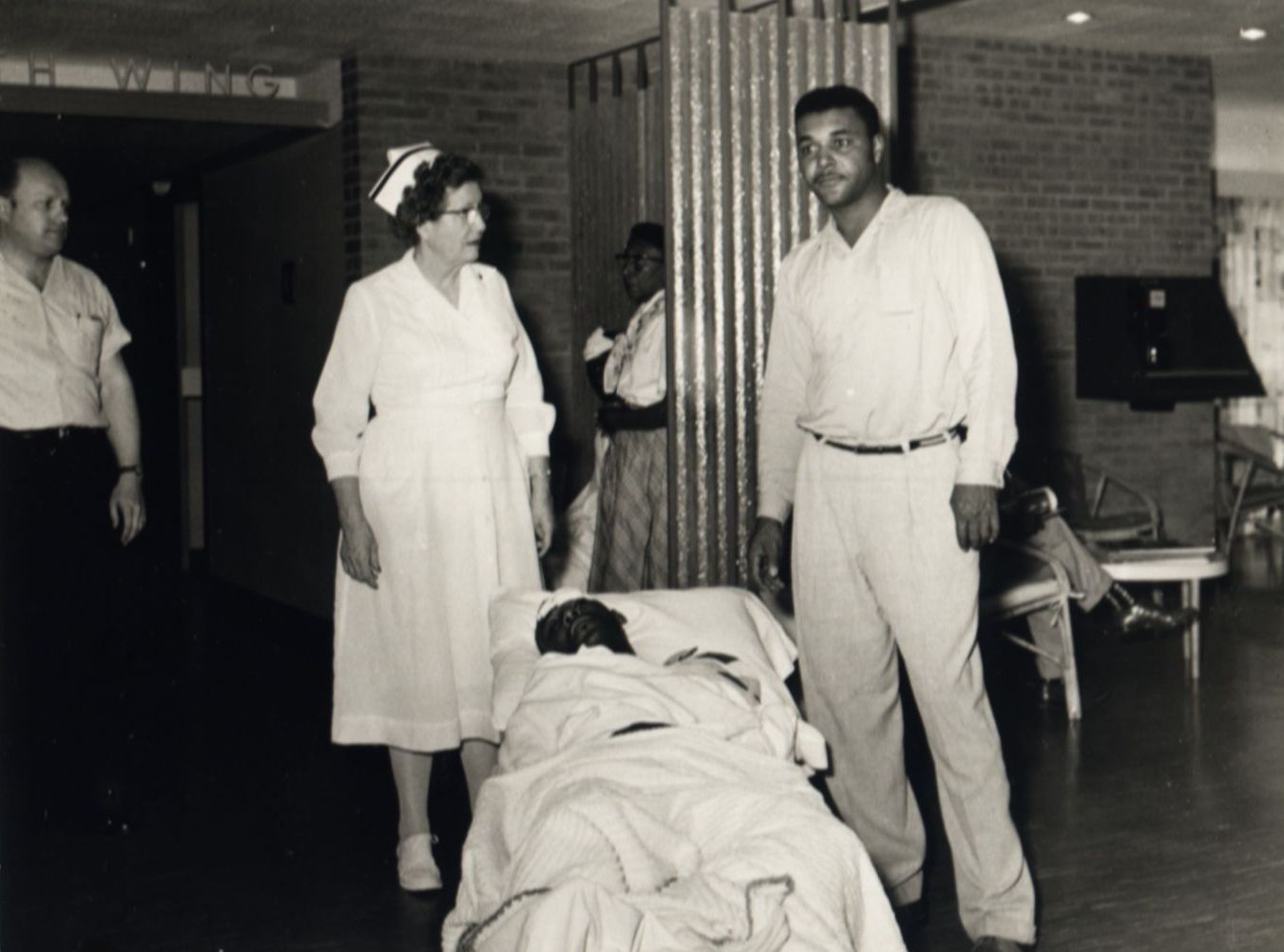
Buster Brown, Hospital Orderly


Nema Sheppard holding door for ambulance attendants delivering patience from old hospital


Sugar Land Baseball


The first photo shows the 1957 Sugar Land Tigers, an African-American team sponsored by Imperial.

  Kneeling L-R: Buster Wharton, Frank Johnson, Monral Daniels, Leonard Raines, Chatman Harton, Earl Kemp, Standing L-R: Tommie Green, Oris Raines, Ruth Matthews, Jessie Lee Grant, Earnest Johnson, Forrest Johnson, Charles Gussett, James Gorman, Charlie Williams, W. T. Thompson, Ervin Wharton

These next two photos were taken on May 22, 1959 at the opening of the new Little League ballpark at the corner of Wood and Kempner Streets.  The first shows George Andre giving a speech in which he presented the property deed to the Sugar Land Lions Club, who built the park.  (Imperial donated the land.)  The second photo shows Sugar Land's two Little League teams, the St. Theresa Knights and the Sugar Land Lions.


The Old Union Hall, 1960


Imperial built a Power Plant on the east bank of Oyster Creek in 1920.  It is the grey building that is still standing.  (See the aerial below.)  They built a new power plant on the west bank within the refinery complex in 1938, leaving the old building for other uses.  One of its uses was a union hall.


The following photos were taken in the hall during May 1960 at a ceremony celebrating a National Safety Council award Imperial had won.


Sugar Land Post Office Employees in 1956


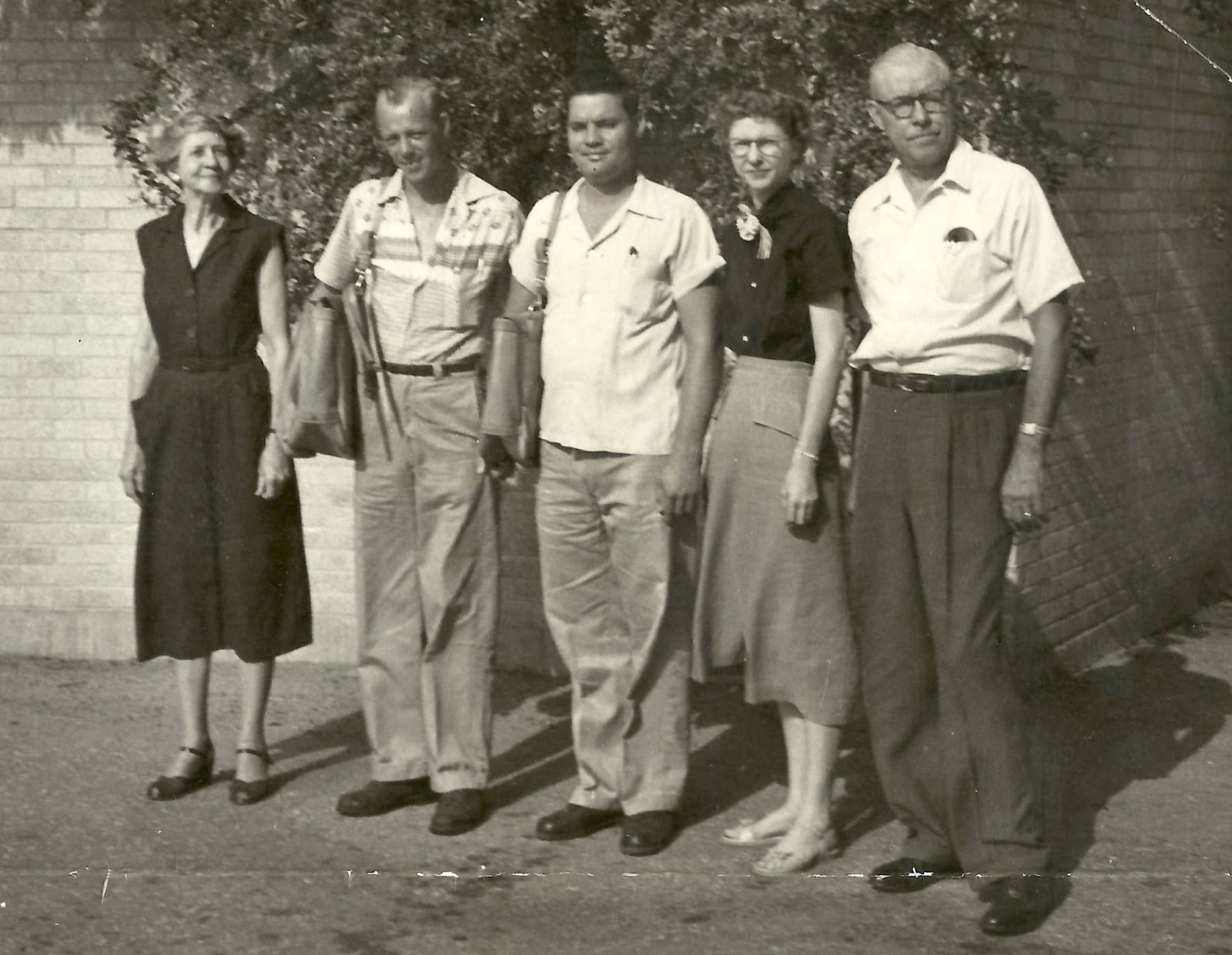
The US Postal Service began home delivery in Sugar Land in July 1956, which is the date of this photo. The Post Office was then located in the shopping center; it looks to me as if they are standing at the rear entrance to the shopping center.


Left to right: Mrs. Nena Mae Iiams, Post Mistress, Meinert Pundt, Mail Carrier, John Hess, Mail Carrier, Mrs. Carroll Smith Rome, Parcel Post Carrier, and W. R. Warrick, Postal Inspector.
 

The Old Machine Shop in 1965


The photo below shows Robert Laperouse, Refinery Plant Manager, speaking with retirees in the interior of the old Machine Shop in 1965.  


The following aerial photo shows where the old Machine Shop was located on the refinery complex.  Just a couple of years later Imperial built a new Machine Shop on the north side of the complex.


Tony Sanchez Retires from Imperial in 1958


Some of you may remember Tony Sanchez.  He was born in Spain and began working in the Cuban sugar industry, which eventually brought him to Imperial and Sugar Land.  At the time of his retirement in 1958 he was a refinery shift superintendent.  Here is a very short article about him that appeared in The Fort Bend Mirror in January 1956.


The following photo was taken at his retirement in 1958.  He's the man in the easy chair, which he received as a retirement gift.


Imperial Sugar Retail Display in the Sugar Land Grocery Store, 1950s


I'm not sure if this photo appeared in any Imperial Sugar promotional materials, but I found it in the files.  That is Maxine Wheeler in the picture.  I think it was taken in the mid to late 1950s.


Monday, May 20, 2013

Palms Theater and Dairy Queen


I've been working at the Sugar Land Heritage Foundation for several months, reviewing their collection of artifacts.  I think their collection is fantastic; all kinds of things turn up.

Here are two photos I hoped to find, but wondered if I ever would.  The first is the only picture of the Palms Theater auditorium I have seen.  (Of course, I hope we find more.)  It was taken on September 11, 1957 and shows the stage prepared for an Imperial safety awards program. 


I've posted aerial photos showing the Dairy Queen, but here's a ground photo showing the old haunt in all its glory.  It was taken in July 1957.
 

The Museum is in temporary quarters for the foreseeable future, so display space will be limited for an extended period of time.  We are, however, rearranging our current layout to allow exhibition of more items from the collection.

I hope the photos in today's post will pique your interest enough to visit the Museum on a Saturday morning between 9:00 am and 1:00 pm.  It's located in the old Imperial Engineering-Personnel building next to the Char House.

I'll alert you when new items go on exhibition. 
    

Teas Nursery


Thanks to my aunt, Mayme Rachuig Hause (SLHS '48), for sending me the following note about Teas Nursery.  I'd forgotten they had a 'small farm' (as opposed to a retail center) in Sugar Land.  The accompanying aerial from 1940 shows what she's describing:


Many of the resident of Sugar Land after World War II are not aware of Sugar Land's connection to the famous Teas Nursery of Bellaire, Texas. Before the war, the area bounded by Brooks St. Eastside and Guenther St. Southside was the area of Belknap Subdivision started sometime in 1950s and a few years before. This area was filled with the gorgeous roses of all species that Teas was famous for. My memory of the roses glistening in the sun as if nature had dusted them with millions of diamonds after their daily sprinkling. The mist swirling around from the tall sprinkling system and the aroma filling the air for blocks around is still as vivid to me today as when I grew up. This area with roses remained until after the war, and then at that time was platted for residences in the newly developing subdivision.


My mother built her home in 1950 in the new development and resided there until her death in 1979. Mother had a love of roses and flowers and it occurs to me if it could have been fostered as she passed by the nursery as she went to work in the Post Office and later bank.


The nursery in Sugar Land was not for retail, but was a place to develop and grow their stock; the retail store was in Bellaire on Bellaire Blvd. Research does not give information if any other area around Bellaire and Houston had another growing area for the nursery.


Teas Nursery was established in 1843 in Raysville, Indiana, and later moved to Missouri, and then in 1910 moved to Bellaire, Texas established just 2 years earlier in the southwest area of Houston. John C. Teas was the founder, and then later to his son, Edward, who ran the Bellaire establishment. After 100 years of operation in 2010, the nursery was sold to the Rubenstein family foundation and is now known as Evelyn’s Park. The old red brick home still stands as well as the Japanese Tea Room.  Both are still visible from Bellaire Blvd behind the fenced area as of spring 2013.


Teas Nursery was responsible for the landscaping of early Houston areas, such as River Oaks, Rice University and other beautiful old homes of the early years .
Many beautiful memories of the nursery in Sugar Land for us “old timers”, and certainly for me for “The Roses of Yesterdays.”


Hispanic School House and American Legion Hall in Mayfield Park


Earlier posts have included aerial photos showing this building, but I recently found the following ground-level photo that shows it well.  It was taken in 1965 when the current American Legion Hall was constructed in Mayfield Park.  An annotation on the reverse says the building was demolished soon after this picture was taken.

It stood on the west side of Ulrich Street just as you entered Mayfield Park driving north.


Laura Eldridge Hospital Construction, 1956


As I've mentioned before, the first hospital in Sugar Land was built in 1923 on the northeast corner of Wood and Lakeview Streets.  In 1956 construction began on a more modern hospital located further east, where Lakeview intersects Eldridge Road.  The Parc is located on that corner today, as you can see on this Google satellite photo.


The following photos show how that location appeared in February 1956 when the site was proposed as the new location and in August of the same year when construction began.

I have more good photos of this hospital's early days, which I'll post in the future.  They show the staff and the interior including the surgery and patients' rooms.
 

Employee Credit Union in 1956


I had forgotten that the employees' credit union was originally located in a small building next to the Char House.  These pictures were taken in April 1957.

 
These next two photos show Wayburn Hall talking with Relma Watson, Assistant Treasurer of the credit union.  Since Wayburn appears in the picture, I assume membership included Industries as well as Imperial employees.


West End Ball Park Update


Several weeks ago I saw a map that showed the old West End Ball Park much closer to Highway-90A than I remembered.  I thought it was a mistake, but I've found an aerial photograph taken in 1952 which confirms the park in that location.

I don't have a date yet, but a few years later the park moved a little over one hundred yards due north on the other side of old Imperial Boulevard.   [I presume Visco (Nalco) expanded westward causing the relocation.]  The move included the stands and 'dug outs,' but there were no outfield fences.  I guess there never were any because they don't appear in the photo.


Monday, May 13, 2013

Alligator Splash from May 17, 1946


Old Sugar Land High School's student newspaper was called 'The Alligator Splash.'  I thought the page I posted last week, highlighting Clara Ruth Sembere Dierks, was interesting, so I decided to post the complete issue.  Many of the senior profiles are amusing, especially if you know the person spotlighted.  

The profiles begin on page 5.

SLHS Alligator Splash, May 17, 1946
 

A Short Video On The Brazos River Pumping Station & The Imperial Valley Railway


I visited the Foster Community area (south of Fulshear) a week ago and had a chance to shoot some video of forgotten relics of the past: the Brazos River Pumping Station and the Imperial Valley Railway.  The video is just 3-minutes long, but I think it's fairly self-explanatory.

The Pumping Station and the railway played significant roles in Sugar Land's early prosperity.  Edward Cunningham (and eventually I. H. Kempner and W. T. Eldridge) needed water for the sugar refinery.  (Steam and water were necessary at various steps in the refining process.)  Sugarland Industries and its partners (like Marshall Canning) needed water for farming and ranching enterprises.

As you can tell in the video, the pumping station is still in operation.  The Gulf Coast Water Authority uses it to manage the water supply in Oyster Creek.

The Imperial Valley Railway was eventually merged into the Sugar Land Railroad.  When local growers abandoned sugar cane as a major crop the railroad went into decline.  It ceased operation in 1952.